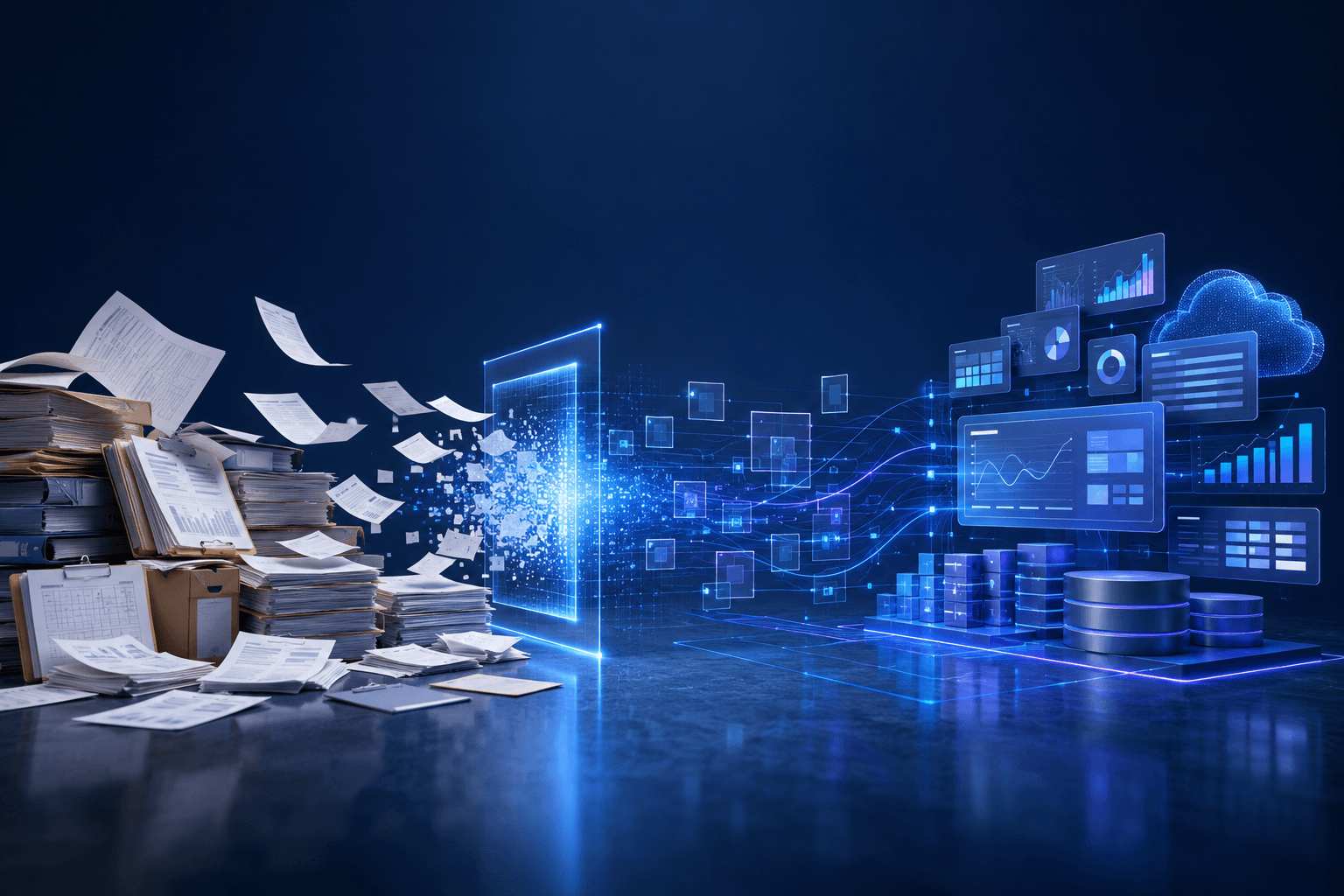
Large to small business firms have massive amounts of data, generated from various platforms. Data from customer interactions, marketing campaigns, sales activities, operational systems, and other digital platforms generates lump-sum information in an unorganized format. In a digitally AI-powered landscape, data provides significant business insights for revenue growth; however, managing and processing it efficiently is one of the challenging aspects faced by small to large business firms.
Managing large datasets manually often leads to errors, processing delays, inconsistency, time consuming and more that can hamper the overall business decisions based insights. These kinds of challenges impact productivity and decision-making of the business. One of the most effective solutions is data processing services, as businesses can transform large volumes of information into organized, structured, and clean data for actionable insights.
Need for Efficient Data Processing Solutions
Businesses look for comprehensive ways to expand, and data is the prime resource. With traditional data management, businesses can no longer efficiently manage large and complex data and extract valuable insights. Large volumes of data come with a variety of challenges that may include;
- Large Data Volumes: Processing information from multiple sources can become time-consuming without structured workflows.
- Data Inconsistency: Duplicate records, missing values, and incorrect entries can affect data reliability.
- Manual Processing Errors: Repetitive manual tasks increase the possibility of human errors.
- Delayed Reporting: Unorganized datasets can slow down reporting and business analysis.
- Limited Data Accessibility: Information stored across different systems makes it difficult for teams to access a unified view.
- Scalability Issues: Existing data processing systems may struggle to accommodate growing business requirements.
Implementing the right data processing solutions helps organizations overcome these challenges while improving operational efficiency.
Key Data Processing Solutions for Managing Large Datasets
Data processing services have become one of the vital aspects of the modern business landscape. Considering the growing volume of information and its importance for firms Choosing the right solution depends on the volume, complexity, and purpose of the data. Here are seven effective approaches businesses can consider.
Automated Data Processing
Automation is one of the most effective ways to manage large datasets. Instead of relying on repetitive manual activities, businesses can use automated workflows to collect, organize, validate, and process information. Automated data processing reduces manual intervention and helps maintain consistency across operations. Key benefits include:
- Faster data processing and handling
- Reduced manual workload and repetitive tasks
- Improved processing accuracy
- Consistent data management workflows
- Better operational productivity
Data Cleansing and Validation
Processing large volumes of inaccurate data can lead to unreliable business reports and poor decisions. Data cleansing helps identify and correct issues before information is used for analysis. It involves removing duplicate records, correcting formatting inconsistencies, identifying missing values, and validating information. The following are some benefits;
- Improved data accuracy and consistency
- Reduced duplication across databases
- Better reporting reliability
- Improved data quality for analytics
- More dependable business insights
Cloud-Based Data Processing
Cloud-based solutions allow businesses to store, access, and process large datasets using scalable computing infrastructure. Unlike traditional systems that depend heavily on local hardware, cloud platforms can provide additional storage and computing resources as business requirements increase.
- Flexible storage and computing capacity
- Easier access to data across teams
- Support for growing data requirements
- Reduced dependency on local infrastructure
- Improved collaboration between departments
Cloud-based data processing is particularly useful for businesses managing information across multiple locations and digital platforms.
Data Integration Solutions
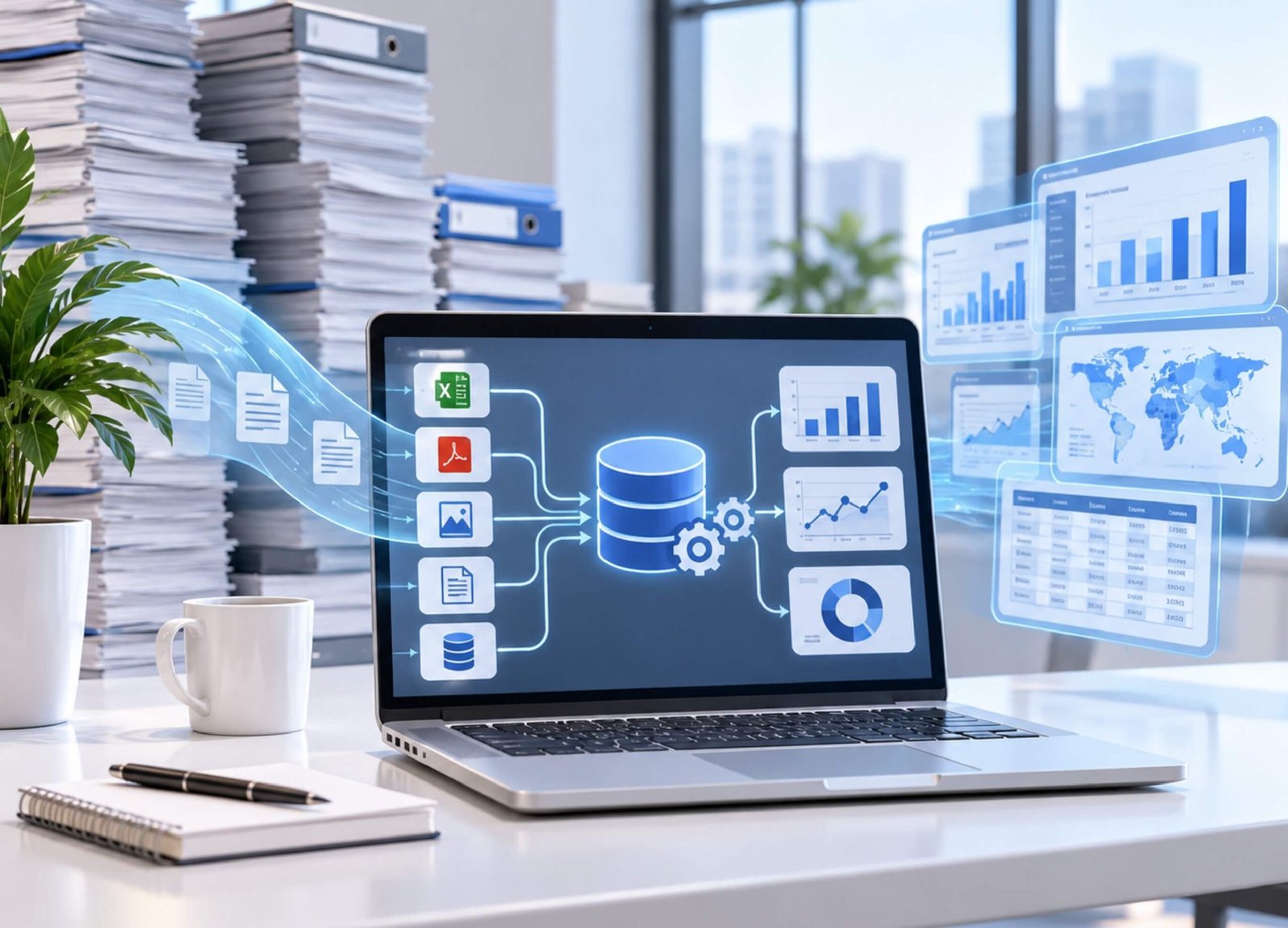
Businesses often collect information from different sources, including CRM platforms, ERP systems, spreadsheets, websites, and financial applications. Data integration combines information from these different sources into a unified structure, making it easier to manage and analyze. Key benefits include:
- Centralized access to business information
- Reduced data silos
- Improved consistency across systems
- Better cross-departmental collaboration
- More comprehensive business reporting
Big Data Processing Solutions
When businesses handle extremely large, complex, and rapidly generated datasets, traditional processing systems may not be sufficient. Big data processing solutions help organizations manage structured, semi-structured, and unstructured information using distributed processing technologies. These solutions support large-scale data analysis and help businesses identify patterns, trends, and relationships within extensive datasets.
- Efficient handling of large datasets
- Faster processing through distributed computing
- Improved pattern and trend identification
- Support for advanced analytics
Industries such as finance, healthcare, retail, manufacturing, and telecommunications can benefit from big data processing capabilities.
Data Visualization and Reporting
Processing data is only one part of effective data management. Businesses also need to understand what their information represents. Data visualization tools such as Microsoft Power BI and Tableau convert processed datasets into interactive dashboards, charts, and reports. These tools help decision-makers monitor business performance without manually reviewing extensive spreadsheets. Key benefits of visualization are;
- Easy interpretation of complex datasets
- Real-time or regularly refreshed performance insights, depending on the setup
- Better KPI monitoring
- Improved reporting efficiency
- Faster identification of business trends
How to Choose the Right Data Processing Solution?
Selecting a suitable data processing approach requires understanding your organization’s current requirements and future objectives. Consider these factors before making a decision:
- Data Volume and Complexity: Evaluate how much data your business handles and whether it includes structured, semi-structured, or unstructured information.
- Processing Requirements: Determine whether you need real-time processing, batch processing, automated workflows, or a combination of approaches.
- Data Quality: Check whether your existing datasets contain duplicate records, missing information, or formatting errors.
- Integration Capabilities: Ensure the solution can work with your existing business applications and databases.
- Scalability: Choose solutions that can accommodate increasing data volumes without creating operational bottlenecks.
- Cost and Operational Value: Consider implementation costs, ongoing maintenance, resource requirements, and expected productivity improvements.
Last Words
Managing high data volumes requires more than simply storing information. Businesses need structured processes and reliable solutions to collect, organize, validate, integrate, and analyze data effectively. From automated data processing and cloud-based infrastructure to data cleansing, integration, and visualization, each solution plays an important role in improving data management.
FAQ

What are data processing solutions?
Data processing solutions are tools, technologies, and services used to collect, organize, clean, transform, validate, and analyze raw data. They help businesses convert large amounts of information into structured and usable datasets.
Which data processing solution is best for handling large volumes of data?
The best solution depends on business requirements. Automated processing, cloud-based infrastructure, big data technologies, data integration, and professional data processing services are commonly used to manage high data volumes efficiently.
How does automated data processing help businesses?
Automated data processing reduces repetitive manual tasks, improves consistency, minimizes human errors, and speeds up data handling. It also allows employees to focus on more strategic activities.
What is the difference between data processing and data analytics?
Data processing involves collecting, cleaning, organizing, and transforming raw information into a usable format. Data analytics involves examining that processed information to identify patterns, trends, and insights that support decision-making.
Why is data cleansing important when handling large datasets?
Data cleansing removes duplicate records, corrects errors, addresses missing values, and improves data consistency. It ensures businesses work with reliable information for reporting and analysis.