The digital universe is expanding so quickly that businesses need to keep track of trends, technology, and innovation. In the ever-expanding universe, every business is looking for novel ways to stay ahead of the market curve. This has become a crucial aspect for organizations to meet demand, and the internet serves as an unparalleled source of information. Competition expansion, product and service range, rising customer demands, dynamic market conditions, technological advancements, and more affect the business in many ways.
While trends constantly change, firms need to stay ahead of the market to thrive in the fierce competition. As digitalization has significantly changed business approaches, data is the new key to success. As a matter of fact, data in today’s digital era plays a crucial role in helping extract key insights to make data-driven decisions and ensure the firm is updated with the current market scenario.
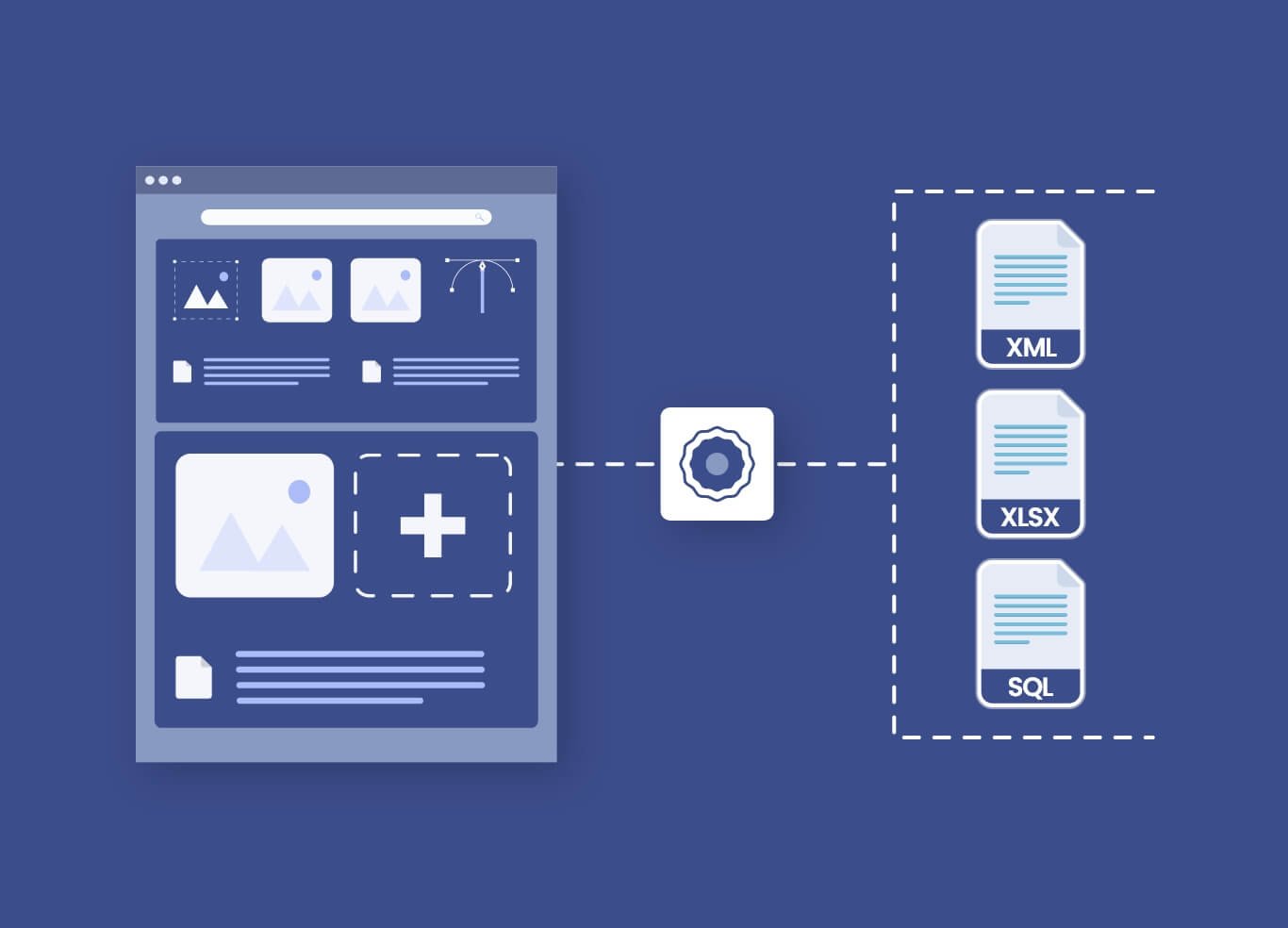
Businesses in different fields generate and collect data from multiple sources in various formats, although that is not enough. To understand the critics of the current market and act accordingly, having prior insights helps inform decisions in line with ongoing trends. The expansion of the digital economy has also led to rising internet data volumes, making it difficult for organizations to extract accurate information. While the internet is a vast pool of constantly updating information, extracting the right information for a particular business realm can be time-consuming and even complex. Therefore, data scraping services are a key solution that allows professionals to scrape the required details from the internet and organize them in a structured format for further processing.
In the world where data rules, every piece of information isn’t true to fact, hence the extraction of details from the right source is evident. Altogether, the modern business approach demands better decision-making through accurate market research using web scraping solutions. The collected data from the internet is used to analyze patterns, trends, correlations, outliers, and anomalies.
Data-driven insights enable businesses to enhance their current work approach and make informed decisions aligned with the market, driving significant growth. From competitor pricing to customer sentiments, the collected wealth of valuable data offers key insights. Today, due to the significant role of the internet and the rise in digital approaches, data scraping for business has become an indispensable tool. Let’s explore data scraping in detail and how businesses gain a competitive advantage through market insights.
Understanding the Role of Data Scraping for Business
Data is everything in today’s digital realm for accurate decision-making, altering the work approach, and helping stay ahead of the fierce market curve. While businesses across fields collect and generate data in various formats from multiple sources, the internet is a key platform for extracting live, up-to-date, and accurate data. Moreover, data is a new resource for business growth; mining data from online sources yields accurate insights.
Let’s take it as an example: imagine accumulating bulk product prices manually. It’s nearly impossible due to the high risk of errors, and it’s also time-consuming and draining. Therefore, web scraping services are a game-changer for extracting product prices from multiple sites simultaneously.
Using specialized software, web scrapers accelerate the process of obtaining the right information. To simply define, data scraping, or per se online web scraping services is the process of extracting information from websites, online databases, social media platforms, news articles, and more. In the modern economy, as said, data is often compared to oil—valuable, but only if you can extract and refine it.
Data scraping (or web scraping) is the automated process of extracting specific information from websites and converting it into a structured format (like a spreadsheet or database). For businesses, this isn’t just a technical trick; it’s a core strategic lever that allows them to stay ahead of the market curve, making data-driven and informed decisions. Here is a detailed breakdown of how it functions as a competitive engine.
Competitive Intelligence & Pricing Strategy
This is the most common use case. In a world where prices fluctuate by the hour (think Amazon or airline tickets), businesses cannot afford to check competitors manually.
- Dynamic Pricing: Retailers scrape competitor sites to automatically adjust their own prices, ensuring they remain the most attractive option without sacrificing margin.
- Product Assortment: By scraping catalogs, a business can see when a competitor launches a new category or runs out of stock, allowing them to pivot their marketing to fill that gap.
Lead Generation & Market Research
Scraping turns the entire internet into a giant, searchable phone book and focus group.
- B2B Prospecting: Sales teams scrape platforms such as LinkedIn, Yelp, and industry directories to find contact information, job titles, and company sizes.
- Consumer Sentiment: Scraping reviews from sites like Trustpilot or Reddit allows companies to perform sentiment analysis. This reveals what customers hate about a competitor’s product, giving the business a roadmap for which features to build next.
Real Estate and Investment Insights
In high-stakes industries, data scraping provides the “alpha” (the edge) needed to make multi-million dollar decisions.
- Real Estate: Agencies scrape listing sites (Zillow, Redfin) to track property value trends, neighborhood turnover rates, and rental yields.
- Hedge Funds: Investors scrape news sites, SEC filings, and even retail trends to predict stock movements before the official quarterly reports are released.
Brand Protection & Monitoring
The internet is vast, and bad actors move fast. Scraping helps companies police their own brand.
- MAP Compliance: Manufacturers scrape third-party resellers to ensure they aren’t selling products below the Minimum Advertised Price (MAP).
- Counterfeit Detection: Automated tools scan marketplaces (e.g., eBay, Alibaba) for “knock-off” goods that use the brand’s intellectual property.
Data scraping or data mining services on online platforms are not only about extracting text-based data but also about handling various data formats as businesses require different datasets, from images to videos to text to customer information, and more. The following are the types of information extracted from web data scraping services.
Various Data Type from Web Scraping Services
Customer sentiments and reviews
Graphics, charts, images
Product information
Social media activity
Pricing comparisons websites
Videos
Text (blogs, website, articles, news, etc.)
A plethora of data types can be collected through data scraping services. Not only does it provide valid information, but it also offers various benefits to businesses, making it particularly beneficial for competitive market intelligence.
Benefits of Data Scraping for Competitive Intelligence
In 2026, data scraping has evolved from a simple “copy-paste” automation into a sophisticated engine for Predictive Dominance. No longer just about tracking a competitor’s price, it now powers AI models that anticipate market shifts before they happen. Here is a detailed breakdown of the benefits of data scraping for competitive market intelligence.
Real-Time Pricing Intelligence (The “Algorithmic War”)
- Pricing is no longer static. Major retailers and SaaS providers use dynamic pricing that changes based on demand, inventory, and competitor moves.
- Dynamic Adjustments: Scraping enables you to monitor competitor price drops in real time. If a rival slashes prices by 10%, your system can automatically trigger a counter-promotion or adjust your own pricing to remain the “best value” option.
- Discount Pattern Recognition: By scraping historical data, you can identify a competitor’s “rhythm”—for example, realizing they always run a 20% flash sale on the last Tuesday of the month.
- MAP Compliance: For brands with third-party resellers, scraping ensures that partners aren’t violating Minimum Advertised Price (MAP) agreements, protecting your brand’s premium positioning.
Sentiment Analysis & “Voice of Customer” Gaps
- Web scraping allows you to listen to what customers are saying about your competitors on forums (Reddit, Quora), review sites (Trustpilot, Amazon), and social media.
- Identifying Weak Points: If a competitor’s latest product has 500 reviews complaining about “battery life,” you can immediately pivot your marketing to highlight your product’s superior battery life.
- Feature Request Mining: Customers often post exactly what they want in future updates. Scraping these “wish lists” gives your R&D team a roadmap for features the market is already demanding but no one is yet providing.
Product & Inventory Intelligence
- Stockout Exploitation: If a competitor runs out of a key SKU (Stock Keeping Unit), real-time scraping sends an alert. You can immediately increase your ad spend for that specific product category to capture “stranded” customers who can’t buy from your rival.
- Assortment Mapping: Scrape competitor catalogs to see where they are expanding. Are they moving into eco-friendly materials? Are they phasing out budget lines? This helps you spot “white space” in the market where there is no competition.
Strategic “Signals” from Non-Traditional Sources
- Market intelligence goes beyond product pages. Scraping “alternative data” provides a deeper look at a company’s internal health.
- Job Board Scraping: Monitoring a competitor’s hiring reveals their next move. If they suddenly start hiring 20 AI engineers, you know they are building a tech-heavy update. If they hire sales reps in Germany, you know they are planning an EU expansion.
- SEO & Digital Footprint: Scraping Search Engine Results Pages (SERPs) tells you which keywords your competitors are “winning.” This allows you to reverse-engineer their content strategy and identify high-value keywords they have overlooked.
Modern Outlook Data Extraction Services
As discussed briefly about data mining services and how businesses have become dependent on the extracted information. From small to large-scale organizations. The biggest shift in 2026 is the transition from rule-based to intent-based scraping.
Future Key Technologies for Data Scraping
Self-Healing Pipelines
The “Real Browser” Era
Generative AI & LLMs
Synthetic Data Augmentation
- Self-Healing Pipelines: Traditional scrapers broke when a website changed its layout (e.g., moving a price tag from the left to the right). Modern AI scrapers use “computer vision” and semantic understanding to locate data points based on context, reducing maintenance by nearly 80%.
- Generative AI & LLMs: Large Language Models now serve as the “extraction engine.” Instead of writing code, analysts use natural language: “Monitor all competing EV chargers and alert me if their warranty terms change.” The AI navigates, identifies the text, and automatically structures it into a database.
- The “Real Browser” Era: Anti-bot defenses have become so advanced that “headless” (invisible) browsers are easily caught. Businesses now use managed cloud-browser fleets that mimic human behavior—including mouse movements and scrolling—to remain undetected.
- Synthetic Data Augmentation: By 2026, Gartner estimates that synthetic data will account for a significant share of AI training data. In market intelligence, companies are using scraped data as a “seed” to generate synthetic customer personas.
Example: A retailer scrapes 10,000 real reviews, then uses AI to generate 1,000,000 synthetic “simulated consumers” to test how a new pricing strategy might be received across different demographics.
- Real-Time Dynamic Strategy: Scraping is moving from weekly reports to streaming intelligence.
- Dynamic Pricing: E-commerce giants use scrapers to adjust prices every few minutes based on competitor stock levels and shifts in sentiment.
- Hyper-Personalization: Sales teams scrape professional platforms (such as LinkedIn or niche forums) to gain real-time insights into a prospect’s current pain points, enabling “market-of-one” outreach.
- Predictive Analysis: Instead of saying “Competitor X lowered prices,” the system says “Competitor X is likely clearing inventory for a new product launch next month.”
- Multi-Modal Scraping: Intelligence is no longer just text. Systems now scrape and analyze images (for logo presence or product design), videos (from TikTok/YouTube for trend forecasting), and even audio.
Outsourcing Data Scraping Services by UniquesData
Data scraping services in the modern world have become vital aspects for business growth and success. It demands the latest use of technology and software, with expertise in managing complex sites and data. Most businesses are focused on the core task that requires significant attention for optimal performance. Therefore, outsourcing web data scraping services is a key solution that enables business professionals to focus on their primary task and obtain extracted insights for further processing and decision-making. UniquesData is a top data scraping company offering services globally, including the USA, Sweden, Europe, and more. With experienced data experts and web scrapers, we aim to deliver high-quality market research using web-scraping techniques across a variety of business sectors.
In the End
Data scraping services are a vital tool for modern businesses to obtain accurate information from online sources. This allows them to make strategic as well as informed decisions, resulting in remaining ahead in the fiercely competitive market.