The landscape of businesses has witnessed a variety of transformations, from technology to a change in approach. Today, the digitalization concept has spread widely, changing how businesses work, process, and streamline operations. Almost every sector today has adopted digitalization, resulting in faster approaches, a variety of benefits, seamless operations, more accurate strategies, and more. The increasing competition in the market has been nerve-racking for many industries, and transforming core operations into digital methods is the key solution.
In the vast and dynamic market, the healthcare sector is the most crucial one as it ensures health, patient care, and more. The economy is large, and the healthcare industry plays a significant role in ensuring the nation’s health and hygiene. More or less, with the increasing pace of digitalization in the dynamic market, the healthcare industry has adopted digital methods, resulting in seamless workflows in hospitals, clinics, medical labs, and more.
The concept of digitalization in healthcare can be defined as the collection of records, documents, and other types of data in healthcare facilities. Digitalization in the medical sector is not only about shifting from paper to digital documents but also about adopting innovative processes for seamless processes. As any hospital or other medical facility focuses on the care of patients, there are various other tasks as well. Moreover, with the adoption of digitalization in the healthcare field, it has improved and transformed the healthcare processes, services, and outcomes, resulting in enhanced and focused patient care.
Digitization of the sector entails a wide range of applications, use of the latest technology, innovations, and more that result in improved patient care, enhanced efficiency, quick results, and patient-focused care. Nonetheless, advanced medical processes and enhanced patient care help in the growth of the medical sector. The healthcare sector adopting digitization generates various amounts of data, which plays a crucial role as it helps in extracting valuable information.
Patient files, documents, medical reports, prescriptions, and more are a few of the many data types in the medical field that are evident to manage, organize, and store for future reference. Patient records digitization to medical report transformation: it is evident that it precisely converts physical records into digital form using the latest technology and innovation. Due to the numerous benefits and growing importance, data digitization services have become a comprehensive approach for the healthcare sector. To understand in detail, let’s break down what digitization is and how digital health records are vital in the medical sector.
Seamless Hospital Workflow with Medical Records Digitization
What is Digitalization?
In the digital world, staying away from technologies and gadgets is nearly impossible. For simple tasks or for crucial complex tasks, technology has been a significant part. As a matter of fact, digitization refers to converting information or data into a digital format. The transition from physical data format to digital format is the key aspect of digitization. Today, in the highly data-driven and digitized world, businesses have turned their traditional approach to digital, resulting in beneficial outcomes, opportunities to thrive in the market, hands-on, valuable insights, and more. While data is the new resource, organizing, managing, and storing it in digital format with the help of data digitization services is a key factor for business success.
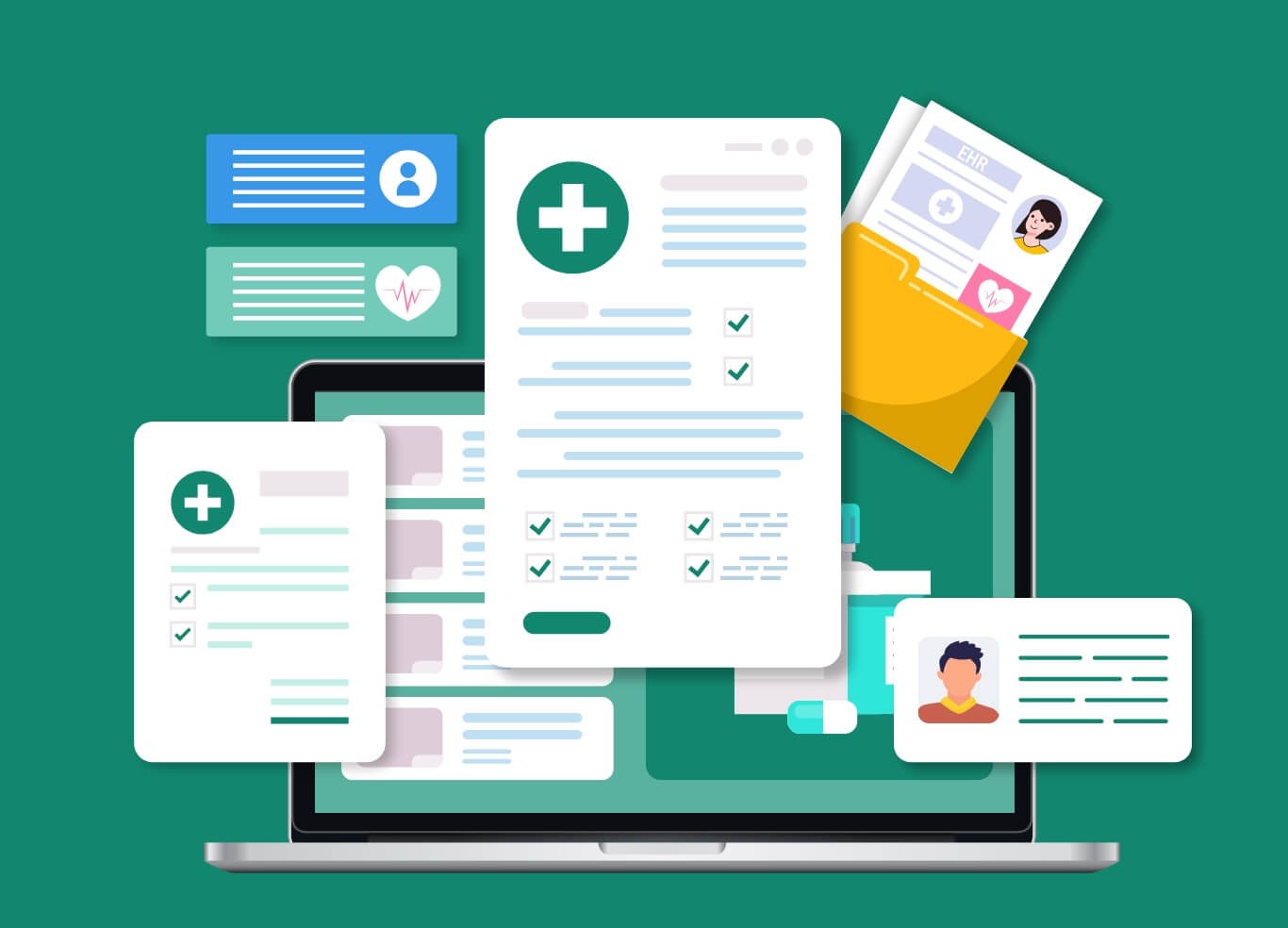
With numerous advantages of digitization, the healthcare sector has adopted a holistic approach to leverage its power and enhance overall patient care, delivering reliable outcomes. Medical records digitization includes medical bills, reports, patient information, treatment plans, and more to provide quick access. This quick access to information allows healthcare professionals to get a glimpse of the patient and provides on-time treatment with the help of digitized patient records. Moreover, patient information is also stored in electronic medical records (EMR).
Above all, confidential physical records are difficult to store, as files can be misplaced or damaged for various reasons, and searching for the right information can be time-consuming. On the other hand, digital health records are quick to leverage, easily transferable, and an organized way to store and more. Not only because of structured storing or easy access to information, but data digitization services also bring a plethora of benefits that enable experts and professionals to streamline the daily operations. The following are the advantages.
- Increased efficiency and productivity
- Better data management
- Space saving
- Supports digital transformation
- Scalability and flexibility
- Improved security
- Easy retrieval
From enhanced accessibility to boosting productivity, the data digitization approach enables businesses to make data-driven decisions and ensures staying ahead of the market. Due to a long list of benefits and impactful results, the medical industry has adopted the concept of healthcare document digitization, recognizing its significant impact and added benefits. Let’s understand in detail how the healthcare landscape is transformed with a digitalization approach.
Digitization in the Healthcare Industry
There was a time in the healthcare realm where manual approaches, processes, and techniques were the key part. Gradually, as the scope of innovation and technology has expanded, healthcare has improved processes and adopted digital methods that enable seamless workflows and quick access. In the healthcare sector, data is produced in various formats, from medical bills to patient information; every aspect of healthcare data is crucial, confidential, and valuable to extract some useful insights for informed decision-making.
Nonetheless, digitized data or information helps healthcare professionals to plan the treatment of the patient accordingly and offer quick diagnosis, resulting in patient-focused care and improved patient treatment. As a matter of fact, hospital operation management demands seamless, accurate, and efficient planning while having quick hands on the desired information.
If we look back today, it was unimaginable that every patient would receive medical reports digitally or that crucial information would be stored in a digital database. It was always stored in physical files, curated manually, and it was a labour-intensive task to manage lump-sum files all at once. This was an archival burden for the healthcare sector, where seamless workflows aren’t evident, but it was an approach to enhance patient care. As briefly discussed about data digitization, the medical data conversions solution is comprehensive, considering the growing concept of digitalization after the pandemic.
In today’s time and age, digital health records and secure data storage are key factors of healthcare facility success. Integration of digital technologies into the medical process improves efficiency, patient-centricity, personalized treatment, quick diagnosis, and more. The healthcare industry not only transformed physical documents into digitized form but also adopted various technologies such as electronic medical records (EMR), AI integration, telemedicine, mobile health apps, fitbands, and more. The following are some of the key benefits of digitization in healthcare.
Advantages of Data Digitization in Healthcare
Improved Patient Outcomes & Safety
Increased Access & Engagement
Enhanced Efficiency & Cost Savings
Advanced Research & Innovation
Improved Patient Outcomes & Safety
- Reduced Errors: Digital records eliminate illegible handwriting, prevent data mix-ups, and provide automated alerts for drug interactions or allergies, minimizing mistakes.
- Personalized Care: Access to comprehensive histories, lab results, and real-time monitoring (wearables) allows for tailored treatments and early intervention.
- Better Care Coordination: Seamless sharing of patient data across specialists ensures coordinated care, especially for complex cases.
Enhanced Efficiency & Cost Savings
- Streamlined Workflows: Digital tools simplify tasks, reduce paperwork, and improve staff productivity.
- Lower Costs: Reduces expenses related to paper storage, labor, and potentially lowers hospitalizations through remote care models.
Increased Access & Engagement
- Telehealth: Enables remote consultations and monitoring, expanding access to care, especially for remote or underserved communities.
- Patient Empowerment: Patients gain easier access to their records, fostering greater participation in their own health management.
Advanced Research & Innovation
- Data-Driven Insights: Analytics on large datasets help identify trends, evaluate treatments, and develop new therapies more effectively.
- Population Health: Aggregated data support proactive population health management and identify systemic quality gaps.
These are some of the major benefits of a medical data conversions solution that results in streamlined operations for medical facilities and allows healthcare professionals to have access to information without consuming much time. Although healthcare data management demands the adoption of the latest technologies that ensure accurate transformation without any errors. Explore in detail healthcare data digitization technologies.
Technologies for Digital Health Records
As briefly discussed, digitization has become a reality for the healthcare sector. Doctors and other medical professionals constantly seek ways to enhance patient care and streamline processes, avoiding long wait times. Digitization is a holistic solution for medical facilities, enabling professionals to keep data together for quick access to information, easy sharing, structured storage, and more.
Healthcare data digitization services relies on technologies like EHR/EMR systems, AI/ML, Cloud Computing, IoT (Wearables/RPM), Big Data Analytics, Blockchain, and Mobile Health (mHealth) to transform records and processes into digital formats, improving efficiency, access, and personalized care through tools like telemedicine, digital imaging, and automated workflows for better patient outcomes and data management. For precise and efficient patient records digitization, the following are some of the core technologies discussed that are beneficial for the healthcare sector.
Key Technologies for Healthcare Digitization
Internet of Things (IoT) & Wearables
Big Data Analytics
Optical Character Recognition (OCR)
Mobile Health (mHealth)
Cloud Computing
Telehealth & Telemedicine Platforms
Blockchain
Digital Imaging & PACS
Artificial Intelligence (AI) & Machine Learning (ML)
Electronic Health Records (EHR) & Electronic Medical Records (EMR)
- Electronic Health Records (EHR) & Electronic Medical Records (EMR): The foundation for storing patient data digitally, replacing paper charts for instant access and sharing.
- Artificial Intelligence (AI) & Machine Learning (ML): Used for diagnostics (analyzing scans), predictive analytics, virtual assistants, and clinical decision support.
- Internet of Things (IoT) & Wearables: Smartwatches, fitness trackers, and remote monitoring devices collect real-time patient vitals, enabling proactive care.
- Cloud Computing: Securely stores massive amounts of health data, enabling access from anywhere and facilitating data sharing.
- Big Data Analytics: Analyzes large datasets to find patterns for population health, treatment effectiveness, and personalized medicine.
- Telehealth & Telemedicine Platforms: Facilitate virtual consultations, remote monitoring, and digital communication between patients and providers.
- Optical Character Recognition (OCR): Automates the conversion of scanned paper documents (like old files) into digital text.
- Blockchain: Provides secure, decentralized ledgers for managing and sharing sensitive patient records across different providers.
- Mobile Health (mHealth): Healthcare apps for medication reminders, health tracking, and patient engagement.
- Digital Imaging & PACS: Digitizes X-rays, MRIs, and CT scans, allowing for instant remote access and AI analysis.
These are some of the key technologies that are significant for healthcare data management. As a matter of fact, this isn’t easy to implement, and picking the right technology. The right skills, knowledge of the process, and ability to manage massive, complex databases are significant requirements. While in-house teams can be an added expense in the healthcare facility, outsourcing data digitization services to reliable companies is a comprehensive solution.
Outsourcing helps ensure the process is executed seamlessly with the proper use of technology. Uniquesdata is one of the top data management outsourcing companies with specialization in data digitization and a wide range of services, with a team of professionals and the use of the latest technologies.
Ending Note
By transforming paper records into digital assets, healthcare achieves greater accuracy, speed, security, and patient-centricity, ultimately leading to better health outcomes and a more resilient system. Medical data conversions solution is a holistic yet evident approach for patient-centric care and improved workflow.