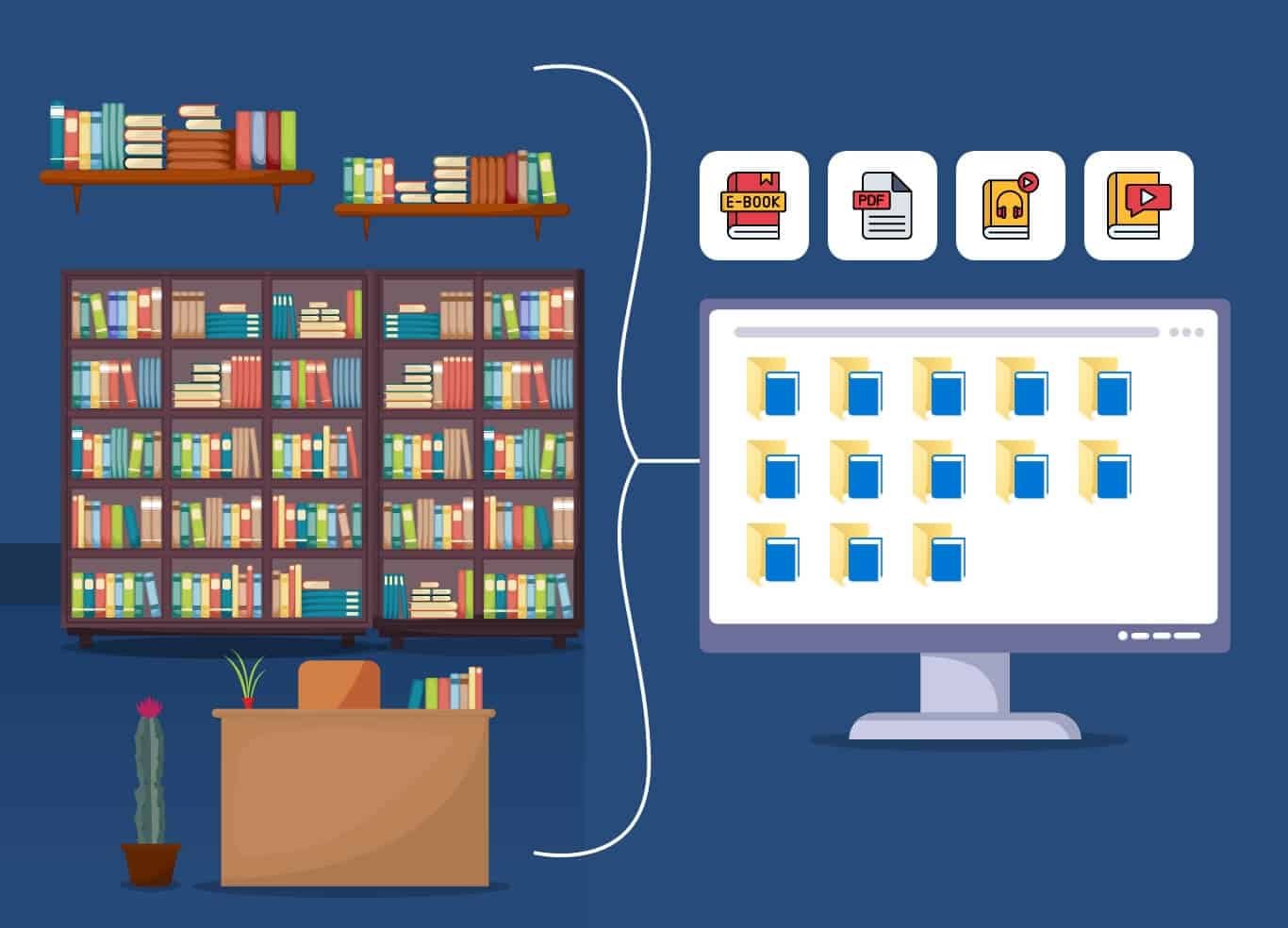
With the growing landscape of businesses, technology, and innovation, new approaches have been key parts. The transformation in the business landscape is driven by digitization, which enables businesses to enhance their daily operations. Digitization has spread like wildfire across all economic sectors, yielding beneficial outcomes. As businesses are growing in novel ways, one of the key success factors is staying ahead of a dynamic market. With digitization evolving, the market has become dynamic, changing as per technology and innovation. Businesses have adopted a digital approach by transforming operations; however, it isn’t the end, but rather a constant updating with technology. While every sector is leveraging the power of digitization, the education sector and pedagogical landscape have also undergone a vital transformation.
From offline classes to online, physical book material to digitized book material in the form of PDFs, research papers, documents, and more. This approach was slowly adopted but has been beneficial in many ways. By streamlining the hectic process, digitization has enabled professionals to gain quick access and safeguard crucial educational data. A large volume of information is cumbersome to manage at once while ensuring its safety and security. Therefore, the pedagogical sector has shifted from a traditional to a digital approach through the adoption of book digitization services.
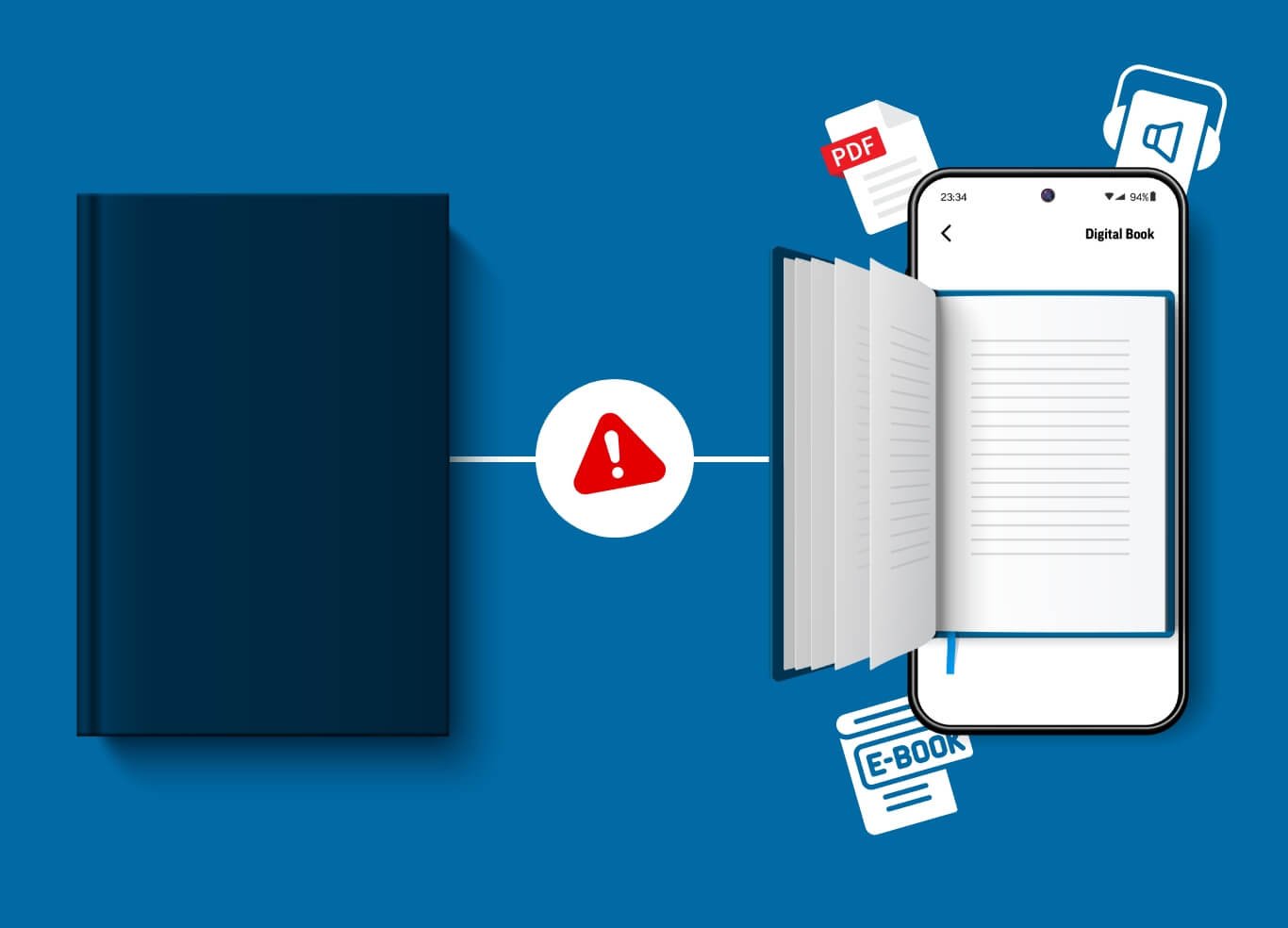
This digitization has created a gap between the teaching and learning domains, hindering a seamless process for professionals and students. Nonetheless, this is also a competitive approach that provides quick access to study material, easy sharing, secure storage, and more. As a matter of fact, the book digitization process is not as simple as it is time-consuming, voluminous, and requires high-end technology for accurate digitization. In the digital era, books in digital format enable students to read and learn from anywhere, from any platform. However, due to a lengthy, technical process, book-scanning quality issues are common, leading to insignificant results. Let’s explore in detail book digitization and some common errors to avoid in the process.
Transform Physical Books to Digital with Book Digitization Services
Understanding Book Digitization Process
In the evolving business landscape where information is moving from dusty shelves to the palm of our hands, book digitization has become more than just a trend—it is a vital act of preservation and accessibility. Whether you are a librarian, a researcher, or a bibliophile looking to archive a personal collection, understanding the meticulous journey from physical page to digital file is essential. As a matter of fact, data digitization has become a comprehensive approach in the digital economy. In simple terms, book digitization is defined as a process of converting physical hard copies into soft copies (in digital copies).
This transformation was done manually, however, with the use of accurate technology and the right process. Book digitization services demand precision, efficiency, and reliability to deliver the desired results without errors. The following is the generic process.
Steps for Book Digitization
Evaluation and Planning
Image Post-Processing & Scanning
Preparation of the book
Optical Character Recognition (OCR)
Metadata and Archiving
Evaluation and Planning
Before a single page is scanned, experts must assess the “patient.” Not all books are treated equally; the method chosen depends entirely on the book’s physical state.
- Condition Assessment: Is the paper brittle? Is the binding failing? Rare or fragile manuscripts require non-destructive methods.
- Destructive Scanning: For modern, common books, the spine may be cut off (guillotined) to allow pages to be fed through a high-speed scanner. This is fast and cheap but destroys the original.
- Non-Destructive Scanning: The book remains intact, usually held in a V-shaped cradle to protect the spine.
Preparation of the book
Proper preparation prevents digital artifacts and physical damage. It is a vital step, as it helps restore historic manuals, single-edition books, or study materials. In this step, it removes the hurdle that can alter the final results. The following are some of the key aspects;
- Cleaning: Removing dust and debris with soft brushes.
- Obstruction Removal: Taking out bookmarks, staples, or loose inserts.
- Repair: Stabilizing torn pages with archival-safe tape to ensure they don’t snag during the process.
Image Post-Processing & Scanning
Book-scanning quality issues can be a major cause of poor results. Book digitization involves scanning, including image capture. Raw scans that are rarely perfect. Software is used to “clean” the digital images:
- De-skewing: Straightening crookedly scanned pages.
- Cropping & Border Removal: Cleaning up the edges for a uniform look.
- Curve Correction: Flattening the digital appearance of pages that were curved during scanning.
Optical Character Recognition (OCR)
A scan is just a picture of text. To make the book searchable, OCR is a primary technology for document digitization.
- The Transformation: AI-powered software “reads” the pixels and converts them into editable, searchable text characters.
- Language Support: Modern OCR can handle multiple fonts, languages, and even some types of handwriting.
Metadata and Archiving
The final step is ensuring the book can actually be found in a digital library. This is one of the vital digitizing book best practices, as it enables you to get quick access and reduces the time spent finding the right information.
- Metadata Tagging: Attaching data like Title, Author, ISBN, Publication Date, and Subject Tags.
- File Formatting: Saving the final product in accessible formats like Searchable PDF, EPUB, or TIFF (for archival preservation).
- Quality Control: A final manual check for missing pages, blurred text, or OCR errors (like “cl” being read as “d”).
These are some of the generic steps in book digitization services that ensure desired outcomes and help store information digitally. This process is not only beneficial for accessing but also for ensuring streamlined operations for teachers and students. Adopting digitization transformed the sector, as digitized books increased access manifold, were more secure, easier to carry, and more.
Mistakes in Book Digitization
Digitizing a library—whether it’s a personal collection or a professional archive—is often a labor of love. However, many people realize too late that “scanning” and “digitizing” are not the same thing. One is just taking a picture; the other is creating a functional, searchable, and preserved digital asset.
To help you avoid the common pitfalls that turn a weekend project into a multi-year headache, here is a guide to the most frequent mistakes in book digitization and how to fix them.
Common Mistakes in Book Scanning Process
Technical & Equipment Mistakes
Poor Lighting Control
Post-Processing & Organization Mistakes
Incorrect Resolution (DPI)
Process & Handling Mistakes
Legal & Long-Term Mistakes
Technical & Equipment Mistakes
Using the Wrong Hardware
One of the most common errors is using a standard flatbed scanner for thick, bound books.
- The Mistake: Pressing a book flat against glass causes gutter distortion (the curved text near the spine) and can snap the binding of older books.
- The Fix: Use an overhead (planetary) scanner or a V-shaped book cradle. These allow the book to stay partially closed, protecting the spine while keeping the text level for the camera.
Incorrect Resolution (DPI)
- The Mistake: Scanning at too low a resolution (e.g., 72 or 150 DPI) to save space. This makes the text look “pixelated” and prevents high-quality Optical Character Recognition (OCR).
- The Fix: * Text only: Minimum 300 DPI.
- Images/Art: Minimum 400–600 DPI.
Always scan in 24-bit color or 8-bit grayscale to preserve the “feel” of the original paper.
Poor Lighting Control
- The Mistake: Using harsh, direct light that creates “hot spots” (glare) on glossy pages or deep shadows in the gutter.
- The Fix: Use diffused LED lighting. Position lights at a 45-degree angle to the book to minimize glare and ensure even illumination across the entire page.
Process & Handling Mistakes
Skipping the “Prep Work”
- The Mistake: Jumping straight into scanning without inspecting the book. Dust, hair, or sticky notes can ruin hundreds of scans before you notice them.
- The Fix: Clean the scanner glass with a lint-free cloth. Use a soft brush to remove dust from the book pages. If the book is archival, wash your hands—do not use cotton gloves, as they reduce dexterity and can actually cause page tears.
Post-Processing & Organization Mistakes
Ignoring OCR (Searchability)
- The Mistake: Saving books as “Image-only” PDFs. You won’t be able to search for keywords, making the digital copy much less useful.
- The Fix: Run OCR software (like ABBYY FineReader or Adobe Acrobat Pro) to create “Searchable PDFs.” This embeds a text layer behind the image.
Legal & Long-Term Mistakes
Forgetting Copyright Laws
- The Mistake: Digitizing a copyrighted book and uploading it to a public server or “Fair Use” site without permission.
- The Fix: Check the copyright status. In the U.S., most works published before 1929 are in the public domain. For newer works, keep the digital files for personal use only to stay within “Fair Use” guidelines.
Future of Digitization
With the rise of AI-powered restoration, businesses can now digitally “repair” faded ink and remove stains on pages that have been there for centuries. Digitization isn’t just about making a copy; it’s about giving a book a second, immortal life in the digital cloud, which is secure, easily shareable, accessible, manageable, and more. From schools to large institutions, every study material, book, and other guides have been transformed into a digital format, pushing the industry to new heights. Integration of AI and other innovative technologies makes this process easier, more maintainable, and more profitable across different sectors.
Nonetheless, the market is dynamic and constantly evolves with technology, which is why outsourcing to digitization companies is one of the holistic approaches. In the evolving landscape, outsourcing is the approach for businesses dealing with large volumes of data. Hence, data digitization companies ensure the efficiency, security, and accuracy of sensitive data, allowing firms to have a hand in the digital data format. Uniquesdata is a top data digitization company with significant experience and a team of professionals. Using the latest technology, experts ensure precision in the book digitization process, enabling educational firms to get digital study material.
Concluding Remark
Book digitization services play a vital role in the current era, pushing the industry forward and going a long way toward protecting information. Instead of traditional book management and keeping, a digitized book format can be accessed and shared from anywhere, bridging the gap between learning and teaching.