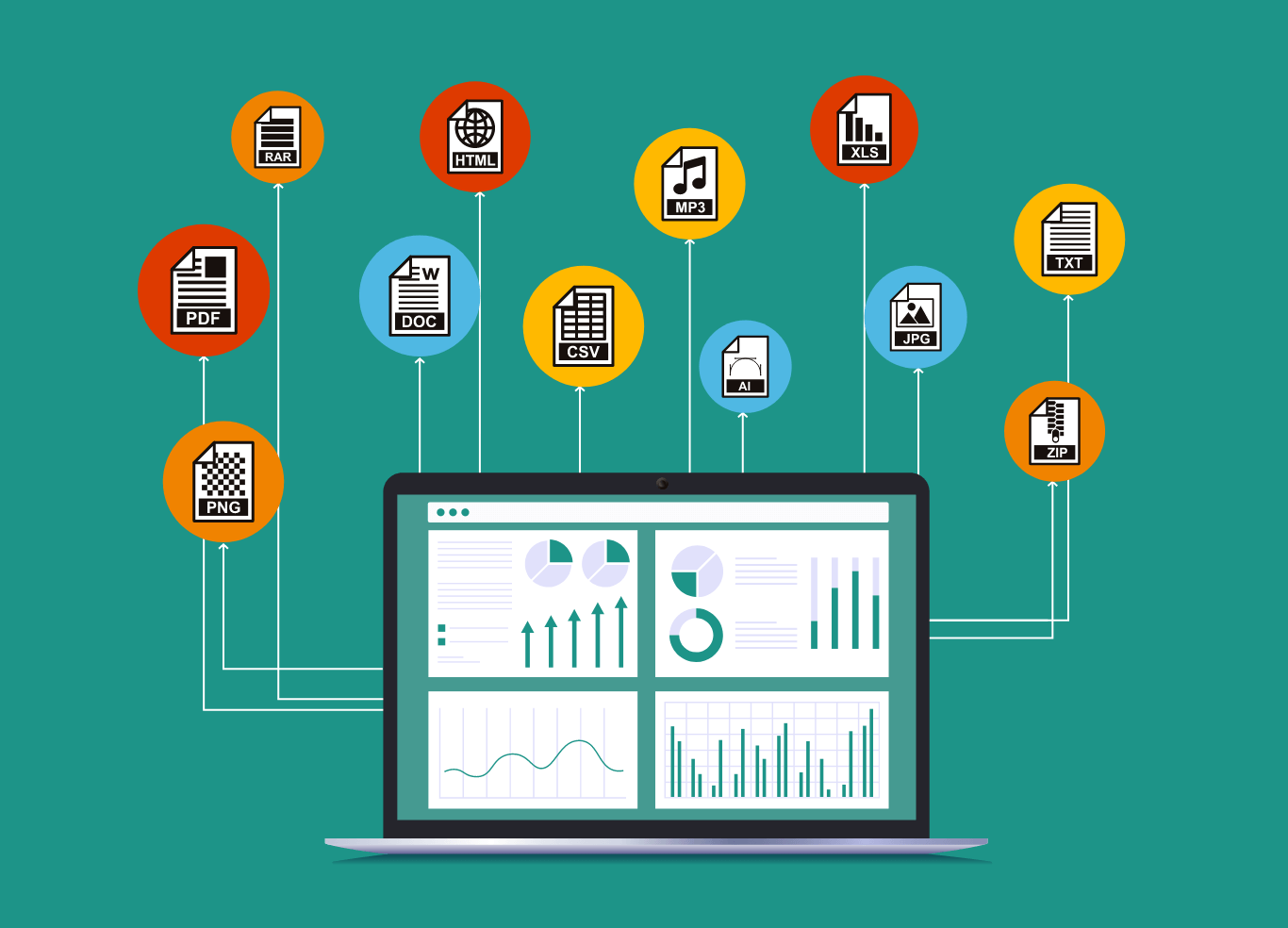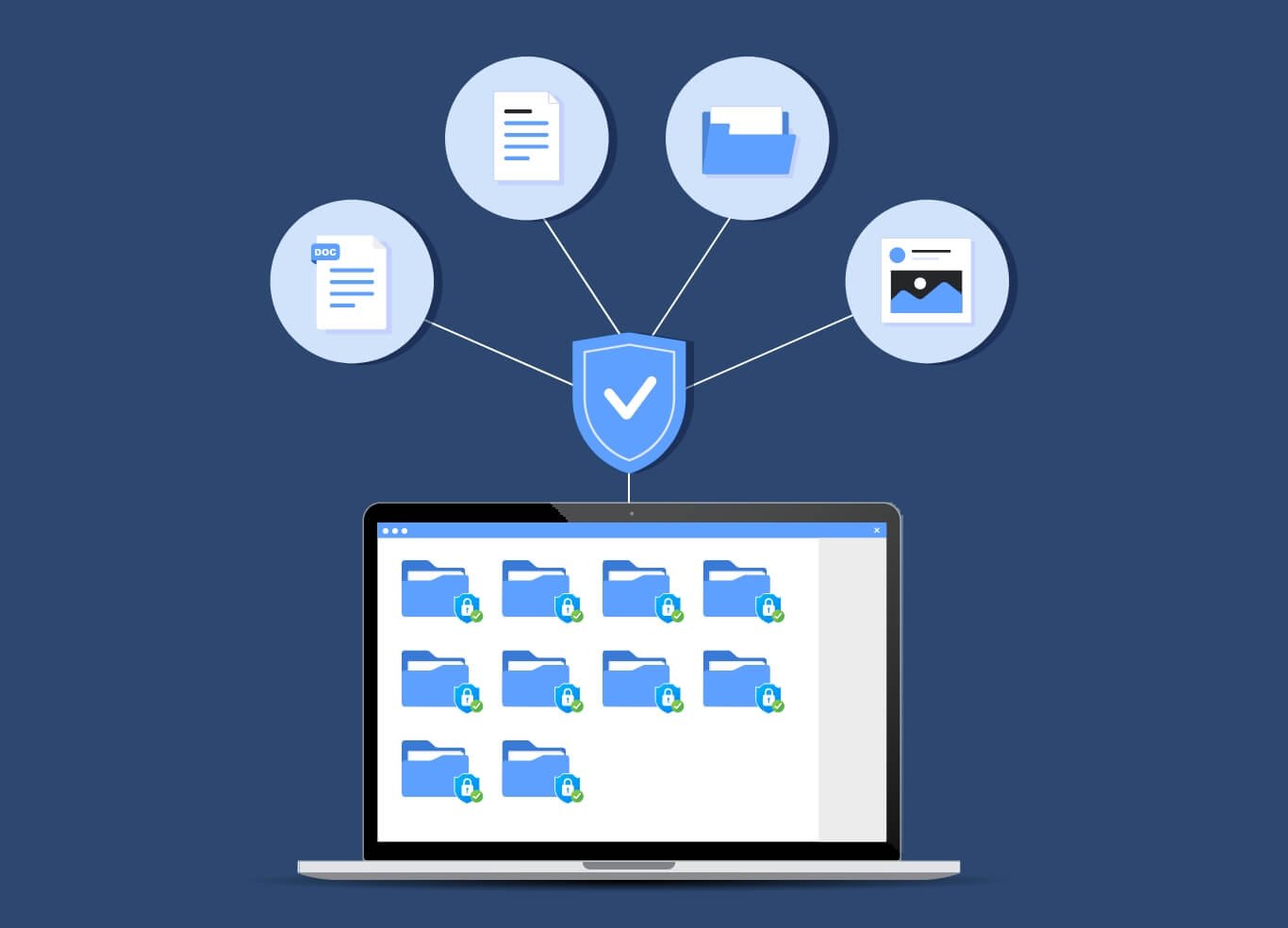
Data is a key resource for every modern business to excel. In a dynamic market and an ever-evolving technological landscape, data has become a crucial asset for success. Not just this, but it also helps make informed decisions, develop strategies, streamline daily operations, and more. As a matter of fact, data comes in various formats, enabling businesses to operate, streamline, and compete effectively. These various data formats are used for different purposes, such as analyzing, generating insights, presenting statistical data, and more. As digital transformation continues across the business landscape, ensuring that all data is securely stored within the organization is essential.
From images to videos to graphs and charts, every piece of information is considered data. In the modern business landscape, documents play a crucial role and serve as vital data for organizations. Nonetheless, digital transformation reshapes every industry through advancements in workflows, effective approaches, streamlined operations, and more. As a matter of fact, physical documents are today converted into digital records and stored in secure databases, where professionals can easily access the information.
Documents in any business are generated and collected from multiple sources that have different roles. Contract documents, legal documents, business amalgamation, employee documents, administrative documents, and more. There are plenty of files and documents that are evident in business and carry key details. Documents converted to digital form require secure storage and compliance with digitalization requirements to ensure the security and accessibility of the information.
Documents in short form entail significant information that allows businesses to make informed decisions and develop strategies accordingly. Moreover, in the digital environment, every work approach is being transformed by digitalization. However, the digitalization approach demands accurate security, compliance with rules and regulations, and more.
There are various aspects for ensuring digital data security; however, it demands precise compliance and strict adherence to rules and regulations. Although before getting into what digital data security is, converting physical files into digital ones is a key process for organizations. Therefore, here document conversion services play a significant role, enabling seamless conversion from paper to digital. Let’s understand in detail the process of document conversion and how to efficiently manage digital document security.
Outsource Document Conversion with Uniquesdata Experts
Key Insights to Document Conversion
Organizations face consistent growth in data. Thanks to the rapid increase in digitalization and consistent techniques, data continues to grow. In various formats, such as images, text, audio, video, and more. One of the most crucial is paper-based documents, which must be maintained, stored, and organized for accurate use. A vast amount of paper documents slowly piles up in a corner of the room. These physical files or documents lead to inefficiencies and inconsistencies, and they are cumbersome to find specific information, making the task time-consuming.
Additionally, storing paper files in a digital format also leads to paper damage, misplaced documents, is expensive to maintain, and can even disrupt business operations. Therefore, to avoid any of the hurdles, electronic document conversion is a comprehensive solution and even beneficial considering the digitalization approach. Businesses going digital allow them to enhance their overall approach and operations, and open doors to opportunities. As a matter of fact, enterprise document management is also evident due to a variety of reasons, such as;
Key Reasons to Implement Document Management
Damage to papers (naturally or calamities)
Expensive management
Storage challenges
Inconsistency in process
Unproductive operations
Security risk
The above reasons highlight the importance of secure document conversion, from paper to digital. As a matter of fact, businesses from any sector face critical challenges that continue to use paper-based files. Hence, document conversion services, or, let’s say, document digitization, play a significant role. It can be referred to as converting the paper-based files into a digital format.
Document conversion is the process of transforming files, such as paper to PDF, Word to HTML, or images to text, to make them accessible, searchable, and usable across different systems, boosting efficiency, security, and collaboration by changing format, structure, and data encoding for better integration with software, archiving, and workflows.
Additionally, key processes involve digitizing physical documents (using OCR for text extraction), converting between digital formats (DOCX, XLS, PPT, PDF), and preparing data for AI or other databases, ensuring compatibility and preserving data. This process is also known as document scanning and indexing and is categorized into various types, as digitization of paper files extends beyond paper to other formats. The following are the defined types of digital document conversion.
Types of Document Conversion
- Paper to Digital: Scanning physical documents and using Optical Character Recognition (OCR secure conversion) to convert images into searchable, editable text/PDFs.
- Digital to Digital: Changing between electronic formats (e.g., Word (.docx) to PDF, Excel (.xlsx) to CSV, PowerPoint (.pptx) to PDF).
- Image to Text: Using OCR to extract text from image files (JPG, PNG) or scanned PDFs.
- Data-Specific Conversion: Converting documents (like CAD files) into formats (like PDF/A) for long-term archiving or specific system integration (ERP, CRM).
These are the types that are commonly known in the business landscape. As a matter of fact, these categorized types demand specific technologies through which business professionals can get access to digitized and secured documents without consuming time. The following are some major technologies commonly used that deliver efficient outcomes.
Key Technologies & Methods
- OCR (Optical Character Recognition): Technology that reads text from images, making scanned documents searchable and editable.
- SDKs (Software Development Kits): Tools used by developers to build custom conversion features into applications, handling complex tasks like data extraction.
- Data Transformation: Involves extracting, transforming (changing structure/encoding), and loading data for target systems.
Technologies and innovations advance over time, resulting in improved outcomes. Organizations, however, need to understand how crucial it is to follow security guidelines, data protection regulations, and other security measures. Transforming from paper to digital isn’t the end goal; it’s also about ensuring secure document conversion for efficient, reliable outcomes. Although it is evident that the document conversion process is detailed.
Understanding the Document Conversion Process
As briefly discussed above, document conversion services play a significant role in business digitalization. It involves transforming documents into a consistent, easily usable digital format while implementing stringent security measures and adhering to relevant data protection regulations, such as GDPR and HIPAA. As a matter of fact, digital document security is an effective approach that enables firms to accurately convert documents to a digital format. Nonetheless, this transformation approach consists of multiple steps that, when collaboratively executed, yield precise outcomes.
For an efficient and reliable document conversion process, partnering with a data conversion company can be a holistic method. This enables small and large firms to focus on their core activities and ensure productivity. The process can be broken down into several key steps, applicable for both in-house projects and outsourced data conversion services:
Steps to Follow for Outsourced Document Conversion
Define Scope and Objectives
Select Technology
Indexing and Filing
Document Preparation
Conversion & Quality Control
Secure storage and deployment
- Define Scope and Objectives: Identify which documents need conversion and prioritize based on criticality, sensitivity, and compliance requirements (e.g., contracts, financial records, or legal documents).
- Document Preparation: Organize, sort, and prepare physical documents for scanning by removing staples, paper clips, and sticky notes to ensure smooth scanning and high-quality results.
- Select Technology: Choose appropriate hardware and software, prioritizing systems that offer robust conversion capabilities, such as optical character recognition, which converts scanned images into searchable, editable text.
- Conversion & Quality Control: Perform test runs, then convert documents in phases or batches. Implement regular quality checks to ensure accuracy, completeness, and preservation of the original layout and integrity.
- Indexing and Filing: Define a clear filing structure, naming conventions, and metadata tagging for converted files to ensure easy retrieval within a document management system (DMS).
- Secure storage and deployment: Store the converted documents in a secure location, such as a cloud environment, with appropriate access controls. Create a robust backup and rollback plan to mitigate data loss risks.
As a matter of fact, the process mentioned above is generic and can be tailored to the project’s requirements. The primary purpose of enterprise document management is to transform the documents into a digital process for easier management, quick access, and seamless access. On the other hand, security measures, regulated document conversion, and adhering to strict guidelines for reliable measures are required. Let’s discuss in detail the digital document security methods.
Key Measures for Secure Document Conversion
As briefly discussed, document security and adhering strictly to data protection guidelines are evident. A document of any business, regardless of size, type, or nature, entails significant details and information. Additionally, a firm may contain various documents containing confidential information, such as contracts, legal documents, administrative files, healthcare records, and more.
Almost every file is crucial for business and may be required for future courses. As a matter of fact, every digitally transformed business document must be quickly accessible, shareable in a file format, and organized in a structured manner. This streamlines and standardizes operations.
Robust security measures are not only vital but also necessary to keep the critical document safe. While implementing conversion solutions, it is evident that the conversion is secure. Security must be a multi-layered approach throughout the entire enterprise document management.
- Data Encryption: Encrypt sensitive data both in storage and when shared or transmitted over networks to protect it from unauthorized access. This protects from unwanted breaches.
- Access Controls and Permissions: Implement granular, role-based access policies to ensure only authorized personnel can view or edit specific documents, reducing exposure in the event of a breach.
- Audit Trails: Maintain detailed audit trails and change logs that track who accessed, modified, or shared a document and when. This is vital for accountability and forensic investigations.
- Vendor Due Diligence: If outsourcing to a data conversion company, select a provider with a proven track record, established chain of custody protocols, and secure facilities with controlled access and video monitoring.
- Employee Training: Develop and implement clear, written policies, and provide regular security training to ensure employees follow the correct procedures.
- Regular Security Audits: Conduct routine audits to identify software vulnerabilities and ensure employee adherence to established security policies and regulations.
- Identify Applicable Regulations: Determine which data protection regulations your business must comply with (e.g., GDPR, HIPAA, SOX, PCI SSC).
- Use Compliant Systems: Adopt document management systems designed with specific industry regulations in mind, prioritizing features such as automated structure detection and tagging to support compliance standards like PDF/UA.
- Maintain Compliance Documentation: Record reports, policies, procedures, and controls that demonstrate the effectiveness of your compliance program as evidence for auditors.
- Preservation and Retention: Ensure your digital records management system supports varying retention schedules and long-term preservation requirements.
Digital document management sure sounds easy; however, the backend process contains critical processes and security measures. Adhering to GDPR guidelines helps keep crucial data safe from security breaches, digital data theft, and information corruption. Hence, robust security measures are important for the digital conversion of documents.
Additionally, it is important to partner with a reliable, renowned data conversion company for effective, precise conversion solutions. Explore the growing importance of outsourcing document conversion services by a renowned team.
Significance of Outsourced Document Conversion
Document conversion has been prominently growing, thanks to digitalization in the dynamic market. Streamlining operations, enhancing accessibility, and improving overall business productivity are key to modern business success. The dynamic market demands consistent adoption of technology upgrades; however, this is the end goal. Adapting the latest approaches and methods demands expertise, knowledge, a substantial investment in capital, and the ability to understand their complexity. Moreover, integrating the latest technologies in the document conversion process demands expertise, skills, and knowledge.
Therefore, partnering with a data conversion company is a key solution that offers accurate, enhanced, and streamlined outcomes for businesses. Moreover, the team of outsourcing ensures precision in enterprise document management through cutting-edge technology. Outsourcing document conversion to professionals allows businesses to focus on core functions and streamline other activities, resulting in enhanced productivity. It is vital to partner with the right outsourcing company that aligns with business goals and can manage large volumes of documents.
Uniquesdata is one of the renowned data conversion companies, with a team of professionals specializing in document conversion. They have access to the latest technologies and software that enable accelerated project timelines. Uniquesdata offers cost-efficient solutions and provides digital document security.
Last Words
Document conversion services have become an indispensable approach for modern businesses. It enables professionals to manage bulk documents and convert them to digital format, improving accessibility, security, and storage efficiency.